

A bowl of beef noodles in Taipei is a completely different experience from breakfast in Tainan. One comes with tender beef and a rich, slow-simmered broth. The other might be fresh milkfish soup served at 8 in the morning.
So, what should you eat in Taiwan?
Beef noodle soup, braised pork rice, xiao long bao, and three-cup chicken are great places to start. But some of the best meals are found beyond Taipei, from Chiayi’s famous turkey rice to Tainan’s traditional breakfasts. Our 8-day Taiwan private tour gives you a chance to experience those regional differences along the way.
This Taiwan food guide covers the dishes worth trying, regional favorites, where to eat, and how much to budget. For travelers who want to dig deeper into local food culture, there are also Taiwan food tours and culinary experiences worth exploring.
Table of Contents

😋 Taiwan Food at a Glance
Not sure where to start? Here’s a quick look at some famous Taiwanese dishes, their Chinese names, and what you can expect to pay.
| Taiwanese Food | Food Type | Typical Price (TWD) | |
|---|---|---|---|
| Beef Noodle Soup | 牛肉麵 | Noodle soup | NT$150–280 |
| Braised Pork Rice | 滷肉飯 | Rice | NT$35–70 |
| Xiao Long Bao | 小籠包 | Steamed soup dumplings | NT$150–300 per serving |
| Three-Cup Chicken | 三杯雞 | Shared chicken dish | NT$250–450 |
| Chiayi Turkey Rice | 嘉義火雞肉飯 | Rice dish | NT$40–80 |
| Milkfish Soup | 虱目魚湯 | Traditional fish soup | NT$90–180 |
| Taiwanese Hot Pot | 火鍋 | Cook-at-the-table meal | NT$250–700 per person |
| Hakka Stir-Fry | 客家小炒 | Shared stir-fried dish | NT$180–350 |
| Oyster Vermicelli | 蚵仔麵線 | Savory noodle dish | NT$60–100 |
| Danzai Noodles | 擔仔麵 | Traditional noodle bowl | NT$50–100 |
| Egg Pancake (Dan Bing) | 蛋餅 | Breakfast | NT$30–65 |
| Tofu Pudding (Douhua) | 豆花 | Dessert | NT$45–90 |
| Bubble Tea | 珍珠奶茶 | Tea drink | NT$40–100 |
Prices are approximate and vary by city, restaurant, ingredients, and portion size.
For first-time visitors, beef noodle soup, braised pork rice, and xiao long bao are the easiest places to begin. They’re widely available, satisfying, and different enough that you’ll get a good introduction to Taiwanese flavors without having to hunt down obscure dishes.
You may also like to read our Din Tai Fung Taiwan Guide.
What Makes Taiwanese Food Unique?
What makes Taiwan food interesting is how much the flavors change between locations and families. Some dishes are slow-braised and deeply savory. Others are light and fresh, built around fish, vegetables, or simple broths.
You’ll also notice a touch of sweetness in some dishes, especially in southern Taiwan. But that doesn’t mean Taiwan food is generally sweet. Its variety comes from generations of cultural influences, local ingredients, and regional cooking traditions.
A Little History Behind Taiwan Cuisine
Taiwan food culture has developed through centuries of migration, cultural exchange, and local traditions. Many of those influences are still easy to recognize in the dishes served today.
- Indigenous traditions: Indigenous communities traditionally used millet, taro, wild vegetables, and local seafood.
- Fujianese and Guangdong influences: Introduced many of Taiwan’s everyday rice, noodle, and soup dishes.
- Hakka cuisine: Known for savory dishes, preserved vegetables, and Hakka stir-fry.
- Japanese influence: Shaped Taiwan’s bento culture, rice dishes, and cooking techniques.
- Postwar Chinese influences
You can still taste these influences today. Beef noodle soup reflects postwar culinary traditions, Hakka stir-fry highlights the use of preserved ingredients, and Tainan’s seafood breakfasts reflect the city’s coastal food culture.
What Does Taiwan Food Taste Like?
Taiwan food is generally more savory and aromatic than intensely spicy, although flavors vary by dish and region. Soy sauce, ginger, garlic, sesame oil, rice wine, fried shallots, and white pepper are some of the ingredients you’ll encounter most often.
Compared with Sichuan cuisine, everyday Taiwanese cooking tends to be milder. Chili sauce is often served separately, so you can add as much heat as you like.
In southern Taiwan, particularly Tainan, you’ll also notice a slightly sweeter approach to seasoning.
And don’t overlook texture. Taiwanese food is full of interesting contrasts, from chewy noodles and tender braised meats to silky tofu and crispy pastries. We even have a word for that satisfying, springy chewiness: Q or QQ.
It’s the same texture that makes tapioca pearls, taro balls, and many traditional Taiwanese desserts so enjoyable.

10 Must-Try Traditional Taiwanese Dishes
There are hundreds of famous Taiwanese dishes, but some are more useful starting points than others.
These 10 give you a good introduction to Taiwan’s everyday meals, traditional restaurant cooking, and regional specialties.
Some are easy to find almost anywhere. Others are worth trying in the city where they became famous of everyday Taiwanese cooking, regional specialties, and the dishes that have become local favorites.
1. Beef Noodle Soup (牛肉麵)
A bowl of beef noodle soup comes with tender chunks of beef, chewy noodles, and a rich, slow-simmered broth. Some versions are bold and deeply savory, while others are lighter and let the natural flavor of the beef shine through.
There are 2 main styles to know:
- Red-braised beef noodle soup (紅燒牛肉麵): A dark, rich broth made with soy sauce, aromatic spices, and sometimes chili.
- Clear-broth beef noodle soup (清燉牛肉麵): A lighter, more delicate broth that brings out the natural flavor of the beef.
For your first bowl, go with red-braised. It’s hearty, comforting, and a great introduction to one of Taiwan’s most beloved dishes.
💰 Price: NT$150–280 per bowl.
📍 Where to try it: You’ll find beef noodle shops all over Taiwan, but Taipei’s Yongkang Street is one of the best-known places to start.
2. Braised Pork Rice (滷肉飯)
Don’t underestimate a small bowl of rice covered in braised pork. It might look simple, but this is one of Taiwan’s most satisfying everyday meals.
Braised pork rice, or lu rou fan, is made with finely chopped pork slowly cooked in a soy-based sauce with fried shallots and spices. The sauce soaks into the rice, giving every bite a rich, slightly sweet flavor.
If you’re exploring Ximending, stop by Tian Tian Li (天天利美食坊) and order their braised pork rice with a fried egg on top. Break the runny yolk over the rice, mix it with the pork, and you’ve got a seriously satisfying meal for just a few dollars.
💰 Price: NT$35–70 per bowl.
📍 Where to try it: Tian Tian Li (天天利美食坊)

3. Xiao Long Bao (小籠包)
When it comes to xiao long bao, Din Tai Fung (鼎泰豐) is probably the first name that comes to mind. Although these soup dumplings originated in China’s Jiangnan region, Din Tai Fung helped put Taiwan’s version on the world map.
Each dumpling has a delicate, thin wrapper filled with seasoned pork and hot, savory broth. The best part? That little burst of soup when you take your first bite.
Just be careful not to burn your tongue!
If you’ve never tried soup dumplings before, here’s how to eat them:
- Gently pick up a dumpling with your chopsticks and place it on a spoon.
- Take a small bite to release some of the hot broth.
- Add a little vinegar and shredded ginger, then enjoy the rest.
💰 Price: Approximately NT$150–300 per serving, depending on the restaurant and portion size.
📍 Where to try it: Din Tai Fung 101 Branch is a great starting point. Smaller local dumpling restaurants are worth exploring, too.
4. Three-Cup Chicken (三杯雞)
Three-cup chicken is the kind of dish you can smell before it even reaches the table.
Known locally as san bei ji, it gets its name from three traditional seasonings: soy sauce, rice wine, and sesame oil. The chicken is cooked with garlic, ginger, and fresh basil until the sauce thickens and coats every piece.
It’s often served sizzling in a clay pot, with the rich aroma of basil and sesame oil filling the air. Order a bowl of steamed rice to soak up the sauce, and share it with a few other Taiwanese dishes for a proper family-style meal.
💰 Price: NT$80–150 per bowl.
📍 Where to try it: Shin Yeh Taiwanese Cuisine (欣葉台菜)
5. Chiayi Turkey Rice (嘉義火雞肉飯)
Chiayi turkey rice might be the best example of why you shouldn’t judge Taiwanese food by appearances. It’s a modest bowl of rice topped with tender turkey and savory cooking juices, sometimes finished with fragrant shallots.
That’s it. No fancy presentation. No mountain of toppings.
The secret is in the details. Some shops use richer sauces, while others let the turkey’s natural flavor shine through. Order it with a bowl of soup and a few traditional side dishes for a proper local lunch.
Chiayi makes a great food stop on the way to Alishan, and turkey rice is one specialty you shouldn’t miss when exploring central and southern Taiwan.
💰 Price: NT$40–80 per bowl.
📍 Where to try it: Chiayi City, particularly traditional eateries around the city center and Wenhua Road area.
6. Milkfish Soup (虱目魚湯)
Fish soup for breakfast?
In Tainan, that’s just another morning. Milkfish is a local favorite, usually served in a light broth with fresh ginger or as savory rice congee. Milkfish belly is especially popular for its tender, rich texture, while the broth brings out the natural sweetness of the fish.
For a proper Tainan breakfast, head to A Hsing Congee (阿星鹹粥), a local favorite serving milkfish congee since 1965. Their signature bowl comes with fish, fresh oysters, and crispy fried garlic. Just watch out for the tiny bones, especially in certain cuts of milkfish.
💰 Price: NT$90–180 per bowl, depending on the dish and portion.
📍 Where to try it: A Hsing Congee (阿星鹹粥)
7. Taiwanese Hot Pot (火鍋)
Hot pot is one of the easiest ways to understand Taiwan’s love of eating together! A pot of simmering broth sits at the table while you cook thinly sliced meat, seafood, mushrooms, tofu, and fresh vegetables. Some restaurants give everyone an individual pot, while others serve one large pot for the whole table.
The fun is choosing your broth and mixing your own dipping sauce with ingredients like soy sauce, garlic, scallions, and chili. Start with a mild broth to appreciate the ingredients, and don’t go overboard with your order.
💰 Price: NT$250–700 per person at casual to midrange restaurants.
📍 Where to try it: Hot pot restaurants throughout Taiwan
8. Hakka Stir-Fry (客家小炒)
This traditional dish combines pork, squid, dried tofu, and scallions or celery, all stir-fried over high heat until everything is coated in a savory, aromatic sauce. The mix of chewy squid, tender pork, and firm tofu makes every bite a little different.
It’s a great dish to share with steamed rice and a plate of vegetables. Hakka cooking is known for making good use of dried and preserved ingredients, and this dish is a delicious example. You can learn more about the traditions behind it in our guide to Taiwanese Hakka culture.
💰 Price: NT$180–350 per shared dish.
📍 Where to try it: Traditional Hakka restaurants in Miaoli, Hsinchu, and Taoyuan.
9. Oyster Vermicelli (蚵仔麵線)
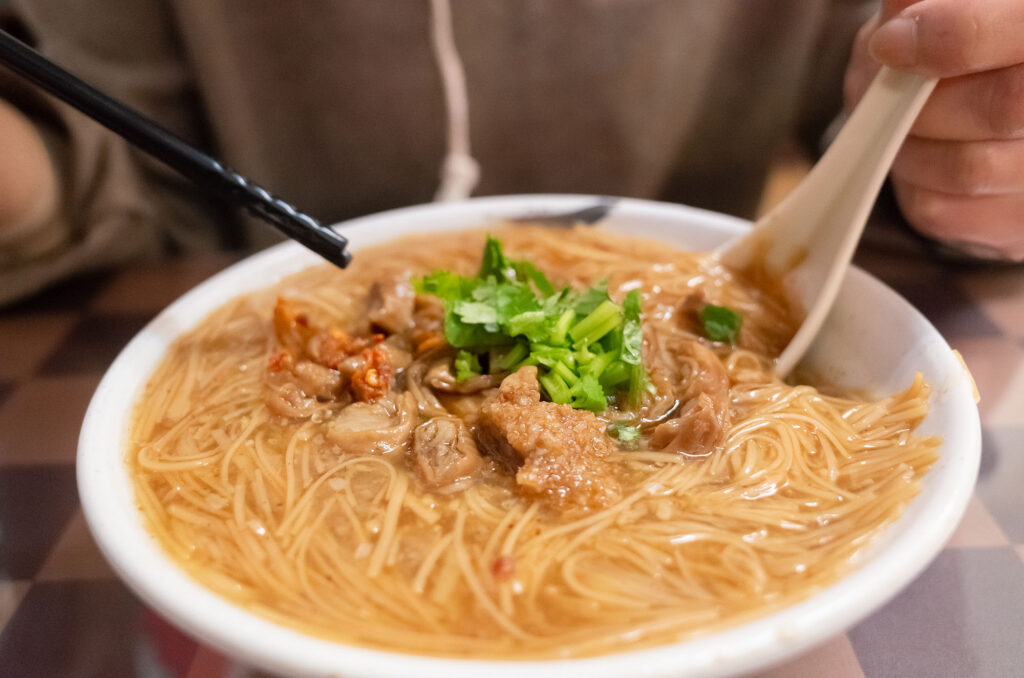
Taiwanese vermicelli comes with thin, soft noodles in a thick, silky broth, usually topped with fresh oysters, braised pork intestines, or both. It’s savory, comforting, and much softer than the chewy noodles you might be used to.
One of the most famous places to try it is Ay-Chung Flour-Rice Noodles in Ximending, known for its pork intestine version. Grab a bowl, add a splash of black vinegar, garlic, or chili sauce, and join the crowd eating along the street.
💰 Price: NT$60–100 per bowl.
📍 Where to try it: Ay-Chung Flour-Rice Noodles (阿宗麵線)
10. Danzai Noodles (擔仔麵)
Don’t be surprised when your bowl of danzai noodles arrives looking smaller than expected.
This Tainan specialty is traditionally served in a modest portion, with noodles, savory minced pork, garlic, and often a shrimp on top. The broth gets its flavor from a combination of pork and seafood, making it surprisingly satisfying for such a small bowl.
Danzai noodles were originally sold by street vendors carrying their cooking equipment on shoulder poles, which is where the name comes from. Today, Du Hsiao Yueh (度小月) is one of the best-known places to try them. Order a bowl with a few traditional side dishes rather than expecting it to be your entire meal. Tainan has far too much good food to stop at one dish.
💰 Price: NT$50–100 per small bowl.
📍 Where to try it: Du Hsiao Yueh (度小月)
What Do Taiwanese People Eat for Breakfast?
Forget the usual eggs, bacon, and toast for a morning. Taiwanese breakfast shops have their own lineup of comfort foods, from savory egg pancakes and sticky rice rolls to warm soy milk and crispy sesame flatbreads.
Many neighborhood breakfast shops open early, serving locals on their way to work or school. They’re casual, affordable, and a great way to experience everyday life in Taiwan. Here are five breakfast favorites worth getting up for.
Dan Bing (蛋餅) — Taiwanese Egg Pancake
Egg pancakes are a breakfast favorite in Taiwan, usually rolled up and cut into bite-sized pieces. Some are thin and crispy, while others are soft and chewy. Fillings range from classic egg to cheese, corn, tuna, and bacon.
The original egg version is a great place to start. Add a little soy-based sauce or chili sauce, grab a cup of warm soy milk, and breakfast is sorted.
💰 Price: NT$30–65.
Fan Tuan (飯糰) — Sticky Rice Roll
There’s a whole breakfast packed into this bundle of sticky rice. Inside, you’ll usually find pork floss, pickled vegetables, and crunchy fried dough. It’s chewy, savory, a little crispy, and surprisingly filling.
Perfect for busy mornings when you’re heading out sightseeing. No utensils needed, and one generously stuffed rice roll can keep you full for hours.
💰 Price: NT$35–70.
Soy Milk (豆漿) — Sweet or Savory
Here’s something you might not expect: soy milk doesn’t always come sweet. The regular version is served hot or cold, but there’s also savory soy milk (鹹豆漿), made with vinegar, seasonings, pickled vegetables, and sometimes dried shrimp.
The vinegar gives it a soft, slightly curdled texture, almost like tofu soup. It’s quite different from the soy milk you’re probably used to, especially with crispy fried dough on top.
💰 Price: NT$20–45.
Luobogao (蘿蔔糕) — Taiwanese Radish Cake
You’ve probably seen something similar on a dim sum menu. In Taiwan, this savory radish cake is also a breakfast regular, made with daikon radish and rice flour, then pan-fried until golden outside and soft inside.
It’s mild on its own, so don’t skip the sauce. A little soy-based sauce or chili makes all the difference.
💰 Price: NT$35–65.
Shaobing (燒餅) — Sesame Flatbread
Flaky layers, toasted sesame seeds, and a crispy crust. This traditional flatbread is delicious on its own, but you can also stuff it with egg or youtiao (fried dough) for something more filling.
Get it while it’s warm, when the outside is still crisp. Pair it with hot soy milk for a classic Taiwanese breakfast combination.
💰 Price: NT$25–65, depending on the filling.

Regional Taiwanese Food: What to Eat Around Taiwan?
Figuring out what to eat in Taiwan gets a lot more interesting once you venture beyond the usual tourist favorites. Some of the best local dishes aren’t necessarily the ones you’ve seen all over Instagram.
Short on time?
Here’s a quick look at what each region does best, so you know which foods to keep an eye out for as you travel.
| Destination | Famous Local Foods | My Recommendation |
|---|---|---|
| Taipei | Beef noodles, braised pork rice, xiao long bao | Start around Yongkang Street for noodles and dumplings. |
| Taichung | Da mian geng, sun cakes, bubble tea | Try the local noodles before making time for tea. |
| Chiayi | Turkey rice, fang kuai su | Stop for turkey rice on your way to Alishan. |
| Tainan | Milkfish soup, fresh beef soup, danzai noodles | Skip the hotel breakfast and eat local instead. |
| Kaohsiung | Cijin seafood, Gangshan lamb, Meinong noodles | Choose Cijin for a seafood lunch by the harbor. |
| Hualien & Taitung | Millet dishes, maqaw, wild vegetables, seafood | Try a community-led Indigenous food experience. |
Want to know where to go and what to order?
Here’s a closer look at Taiwan food by region, with local favorites and a few tips to help you decide what’s worth your time.
Taipei
First time in Taiwan? Taipei makes a pretty good starting point. You can try several of the country’s most famous dishes without spending your whole day traveling between restaurants. Around Yongkang Street, you’ll find noodles, dumplings, and desserts within walking distance.
- Beef Noodle Soup
- Braised Pork Rice
- Xiao Long Bao
- Three-Cup Chicken
A private Taipei holiday tour also gives you room to explore the city’s sights without spending your whole visit figuring out transportation.
Taichung
Everyone talks about bubble tea in Taichung, but please save some room for the food. The city has a few old-school specialties that are easy to miss when you’re busy chasing famous drink shops.
- Sun Cakes
- Da Mian Geng (大麵羹)
- Taichung Meatballs
- Pearl Milk Tea
Chun Shui Tang is a famous name, but there are plenty of other good options. Our best bubble tea in Taichung guide can help you narrow them down. Taichung also works nicely as part of a trip to Sun Moon Lake, rather than a destination you have to plan around on its own. Our 4-day Taiwan holiday package covers both, along with Taipei and Jiufen.
Chiayi
In Chiayi, a small bowl of turkey rice with a few side dishes is often all you need.
- Turkey Rice
- Fang Kuai Su (方塊酥)
Chiayi is a sensible place to stop before heading into the mountains, especially when traveling through central and southern Taiwan.
Tainan
Here’s one city where I’d skip the hotel breakfast. Tainan has plenty of traditional food shops that open early, and some of the dishes worth trying are best enjoyed in the morning.
- Milkfish Soup or Congee (虱目魚湯/虱目魚粥)
- Fresh Beef Soup
- Danzai Noodles (擔仔麵)
- Shrimp Rice
- Savory Rice Pudding (碗粿)
For seafood, start with milkfish. Prefer meat? Make fresh beef soup your first morning meal instead. You can always save the smaller dishes for later while exploring Tainan’s old streets.
Food also fits naturally into a day of historic sightseeing here. Our private Tainan day tour is a useful starting point for planning the city around the places you most want to visit.
Kaohsiung
Let’s talk about seafood first. Cijin is a good choice when you want to sit down with a few plates to share, especially after exploring Kaohsiung’s harbor.
But the city’s food scene doesn’t end at the coast.
- Cijin Seafood (旗津海鮮)
- Gangshan Lamb Dishes (岡山羊肉)
- Meinong Flat Rice Noodles (美濃粄條)
- Papaya Milk (木瓜牛奶)
Here’s how I’d choose: Cijin for seafood, Gangshan for lamb, and Meinong for Hakka food. They aren’t all close together, so don’t try to squeeze them into one lunch outing.
Hualien & Taitung — Indigenous Food
The food changes quite a bit once you reach eastern Taiwan. You’ll find ingredients tied to the mountains, farms, and coastline, along with Indigenous cooking traditions that vary from one community to another.
And there’s more to these food traditions than what’s on the plate. Our private 2-day Hualien tour includes a visit to Malasang Hunter School, where you can learn about Amis culture through hands-on activities. Depending on the program, you might even get to prepare bamboo rice or taste traditional local food.
Here’s what I’d look for on the menu:
- Millet-Based Foods (小米料理)
- Maqaw (馬告)
- Wild Vegetables (野菜料理)
- Hualien Mochi (花蓮麻糬)
- East Coast Seafood (東海岸海鮮)
For Indigenous cuisine, I’d choose a community-led food experience over a restaurant offering a generic “Indigenous platter.” You’ll get a better understanding of what you’re eating and how the ingredients connect to the community. Our Indigenous Taiwan guide is a good place to learn more before your trip.

Taiwanese Desserts and Drinks
Still have room for dessert? Taiwan has plenty to choose from, and not everything comes loaded with sugar.
- Douhua (豆花)
- Shaved Ice (剉冰)
- Taro Balls (芋圓)
- Pineapple Cakes
- Bubble Tea
- Taiwanese Tea (台灣茶): Give high-mountain oolong or Oriental Beauty tea a try. A proper tea tasting is worth making time for, especially if you’ve only had bottled tea before.
Can’t choose? Go for douhua after a heavy meal, shaved ice on a hot day, or taro balls if you love chewy textures.
Taiwanese Street Food and Night Markets
Taiwanese street food is worth exploring beyond the usual restaurant meals. Think crispy popcorn chicken, freshly baked pepper pork buns, scallion pancakes, and stinky tofu that tastes much better than it smells. There’s a lot more to try, so the Taiwanese street food guide covers the snacks worth ordering, what they taste like, and how much they cost.
Night markets bring many of these favorites together, making it easy to try several dishes in one evening. For help choosing where to eat, take a look at the Taiwan night markets guide.

How Much Does Food Cost in Taiwan?
One of the best things about Taiwan food is how affordable it can be. A bowl of braised pork rice can cost less than a cup of coffee, and even a modest budget can get you a satisfying meal at a local eatery.
Here’s what you can expect to pay:
| Food or Meal | Typical Price (NT$) |
|---|---|
| Traditional breakfast with a drink | 60–120 |
| Braised pork rice | 35–70 |
| Beef noodle soup | 150–300 |
| Local lunch or rice meal | 100–200 |
| Night market snacks | 40–120 each |
| Bubble tea | 50–100 |
| Casual restaurant dinner | 250–500 per person |
Prices are estimates and vary by restaurant, city, and portion size. Budget extra for premium seafood, specialty restaurants, and service charges.
A 1-Day Taiwan Food Experience
Only have one day to explore Taiwan’s food scene?
Taipei is an easy place to start. Here’s how I’d spend a day eating without turning the entire trip into a restaurant checklist.
| Time | What to Eat |
|---|---|
| Breakfast | Shaobing with egg and warm soy milk |
| Lunch | Braised pork rice with a fried egg |
| Afternoon | Xiao long bao or a cup of Taiwanese tea |
| Dinner | 3-cup chicken and shared Taiwanese dishes |
| Dessert | Douhua or shaved ice |
You don’t have to follow this schedule exactly.
Have a late breakfast, skip a snack if you’re full, or trade dinner for a night market. The point is to try a few different sides of Taiwanese food, not eat five enormous meals.
FAQ About Taiwan Food
What food is Taiwan most famous for?
Beef noodle soup, braised pork rice, xiao long bao, and bubble tea are among the best-known favorites. Three-cup chicken, milkfish soup, and regional rice dishes are also worth trying.
Is Taiwanese food spicy?
Not usually. Many everyday dishes are savory, slightly sweet, or mild rather than spicy. Chili sauce is often available separately, so you can add as much as you like. Just be aware that some dishes come spicy by default.
Is Taiwan good for vegetarians?
Yes. Vegetarian restaurants and buffets are common, especially in larger cities. Look for 素食 (vegetarian) or 蔬食 (plant-based), and confirm ingredients if you avoid eggs, dairy, or particular seasonings.
What food should I try on my first trip to Taiwan?
Start with beef noodle soup, braised pork rice, xiao long bao, and three-cup chicken. They’re popular for good reason and easy to find in Taipei. Save room for a traditional Taiwanese breakfast, too. Egg pancakes and warm soy milk are a great way to start the day.
What is the best city in Taiwan for food?
Taipei is the easiest place to start, especially if you want plenty of choices in one city. But Tainan is hard to beat for traditional southern dishes, and Chiayi is worth a stop for turkey rice.
The Taiwan food by region section above breaks down what each destination is known for, so you can plan your meals around the places you’re visiting.
Discover Taiwan Through Its Food
A So, where should you start?
That depends on how much of Taiwan you want to experience. Taipei is a great choice for a short food-focused trip, but staying in one city means missing out on some of the island’s regional specialties.
If trying different foods is your main priority, start with Taiwan food and culinary experiences. You can choose activities that match your interests rather than trying to fit everything into one itinerary.
But food doesn’t have to be the whole reason for your trip. Some travelers would rather spend their days exploring Taiwan and enjoy its local specialties along the way. That’s a perfectly good way to travel, too.
For that kind of trip, the 5-day Sun Moon Lake and Alishan tour is worth considering. You get to explore two of Taiwan’s best-known scenic destinations while discovering the tea culture they’re famous for.
The choice is yours: plan your trip around food, or let good food become part of the journey.