

If you start planning a Taiwan trip, something strange happens very quickly.
You keep finding places called “Old Street.”
Jiufen Old Street.
Shifen Old Street.
Lukang Old Street.
Daxi Old Street.
Sanxia Old Street.
Anping Old Street.
At some point, most travelers reasonably ask:
Do I actually need to visit all of them?
Definitely not.
After planning Taiwan itineraries for international visitors, we think choosing old streets by popularity alone is one of the least useful ways to plan a trip.
Some Taiwan old streets grew around ports. Others developed through gold mining, railways, tea, Hakka settlements or agricultural trade. Some are worth visiting for architecture; others are really about food or a particular experience.
If you’re building your first trip around several regions, our Taiwan 5 Day Itinerary shows why we prefer combining different types of experiences rather than filling every day with similar attractions.
This guide compares the 10 best old streets in Taiwan for international travelers, based on history, food, atmosphere, surrounding attractions, transportation and how naturally each place fits into a real Taiwan itinerary.
And we’ll tell you something many “Top 10” lists don’t:
which ones you probably don’t need.
Table of Contents
✨ Best Old Streets in Taiwan: Quick Comparison
| Old Street | Location | Best For | Time Needed |
|---|---|---|---|
| Jiufen Old Street | New Taipei | First trip, scenery, tea | 2–3 hrs |
| Lukang Old Street | Changhua | History, temples, architecture | 3–5 hrs |
| Dihua Street | Taipei | Old Taipei, shopping, tea | 2–3 hrs |
| Shifen Old Street | New Taipei | Sky lanterns, families | 1–2 hrs |
| Anping Old Street | Tainan | History and food | 2–4 hrs |
| Daxi Old Street | Taoyuan | Historic façades, tofu | 2–3 hrs |
| Sanxia Old Street | New Taipei | Architecture and temples | 2–3 hrs |
| Tamsui Old Street | New Taipei | Waterfront and sunset | 3–5 hrs |
| Beipu Old Street | Hsinchu | Hakka culture, tea, seniors | 2–4 hrs |
| Qishan Old Street | Kaohsiung | Southern architecture, bananas | 2–3 hrs |
Only have time for one? Choose Jiufen.
Want the deepest history? Lukang.
Staying only in Taipei? Dihua Street.
Traveling with children? Shifen.
Love Taiwanese food? Anping or Lukang.
Want Hakka culture? Beipu.
Want somewhere less obvious to international tourists? Qishan.
💁🏻♀️ What Is an Old Street in Taiwan?
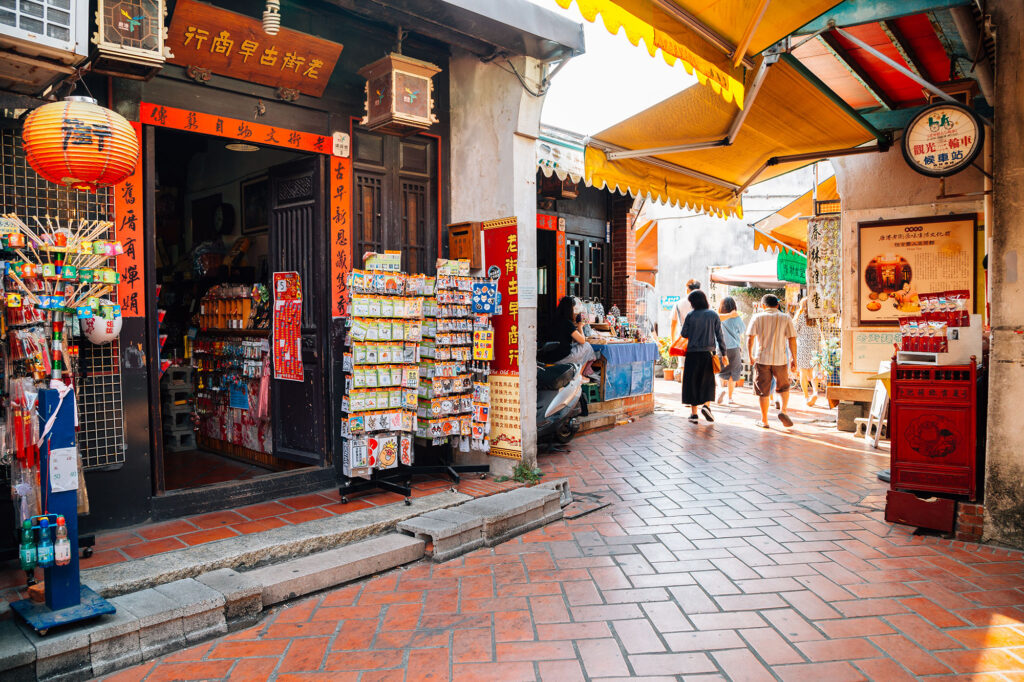
Taiwan’s old streets generally grew from historic commercial districts.
Before highways, HSR stations and shopping malls, communities developed around ports, temples, river transport, railway lines, mines and agricultural markets.
The businesses changed over time, but many streets retained older shophouses, arcades, temples and regional food traditions.
That does not mean you should expect an untouched historical village.
A typical Taiwan old street might have a century-old brick building beside a bubble-tea shop.
A temple beside a convenience store.
A traditional pastry maker beside an Instagram café.
That mix is part of the experience.
These aren’t archaeological ruins.
People continued living and doing business there.
1. Jiufen Old Street — Best Overall for First-Time Visitors
For most international visitors, Jiufen is still the old street we would choose first.
Not because it is quiet.
It isn’t.
Not because it is Taiwan’s oldest.
It isn’t that either.
Jiufen succeeds because everything comes together in one place:
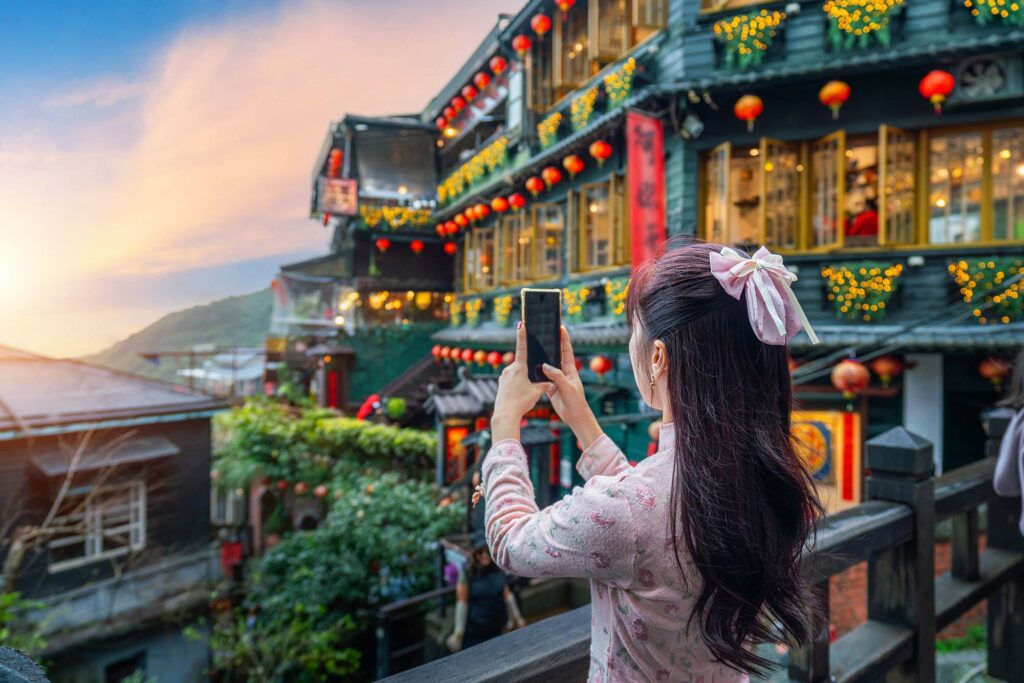
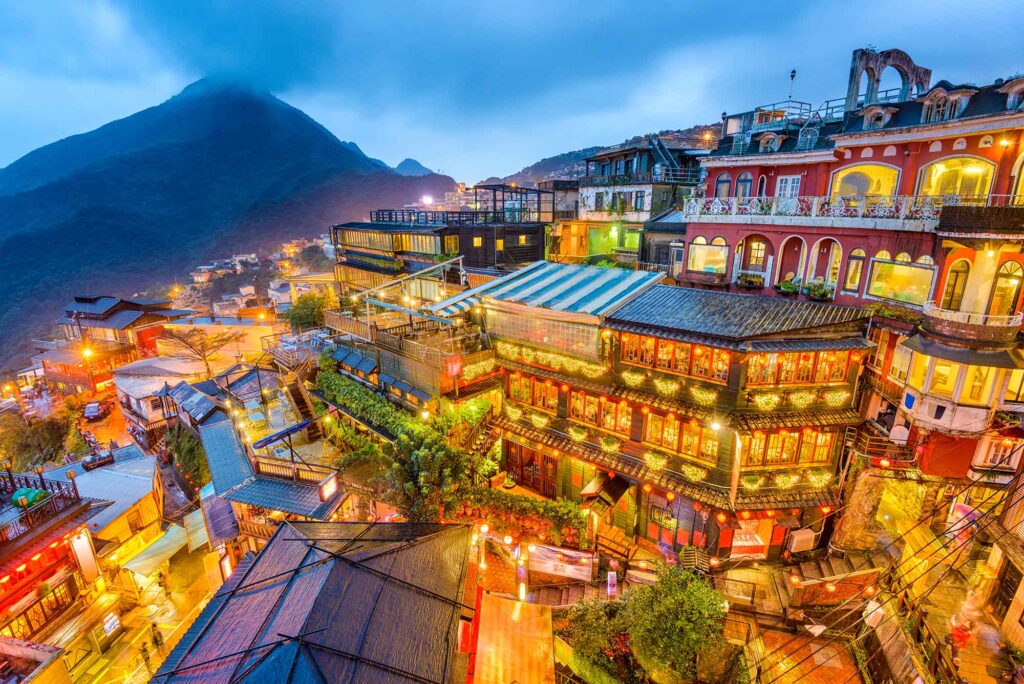
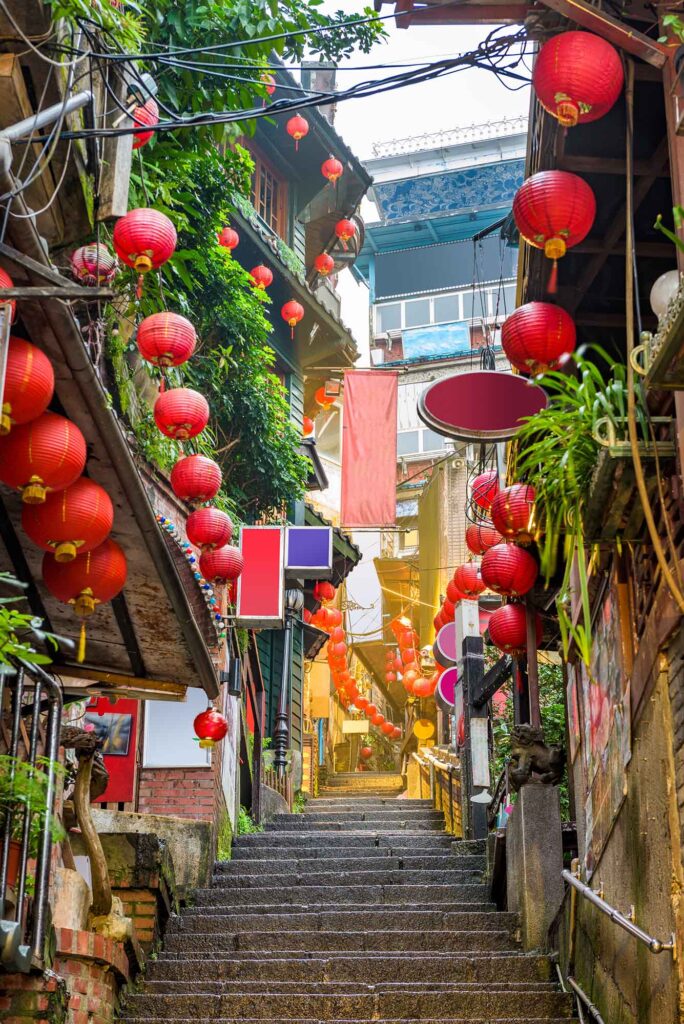
mountains, sea views, mining history, tea houses, food, narrow lanes and red lanterns.
Taiwan’s Tourism Administration identifies Jiufen Old Street as the main commercial district running through the mountain village, with local food, preserved historical elements and views toward the sea.
What actually makes Jiufen worth visiting?
Most people enter through Jishan Street and immediately encounter snacks.
- Taro balls
- Fish-ball soup
- Herbal rice cakes
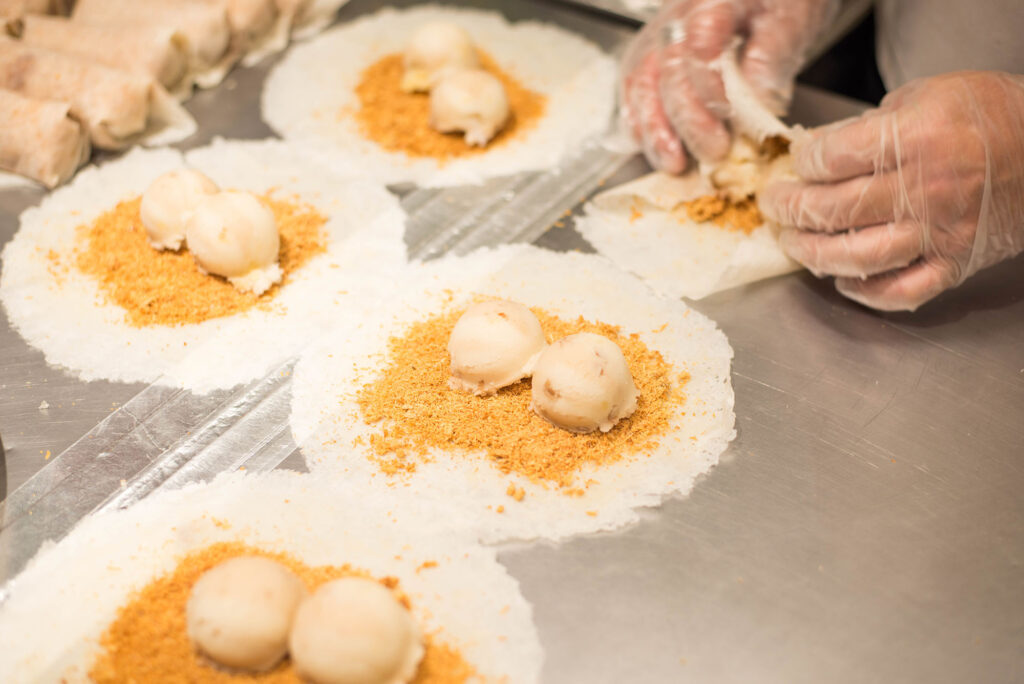
- Peanut ice-cream rolls
- Tea
It can initially feel like one long food market.
Keep walking.
The streets begin connecting with steep staircases and viewpoints, and suddenly you understand why Jiufen is different from most of the old streets on this list.
The mountain falls away beneath the town.
The Pacific appears in the distance.
On sunny days, you get sweeping views.
On misty days, Jiufen becomes moody and atmospheric.
Both work.
For transportation, food stops, Jinguashi, Gold Museum and the best route from Taipei, read our Jiufen Self-Guided Tour.
Don’t rush through Jiufen
This is one of the biggest mistakes we see.
Visitors create:
Yehliu → Golden Waterfall → Jiufen → Shifen → waterfall → night market
and then allow 45 minutes for Jiufen.
Technically, they visited.
Experientially, they mostly walked through a crowd holding taro balls.
If tea culture interests you at all, leave time to sit in a tea house.
That slower hour often becomes more memorable than another photo stop.
Best time
For fewer people, visit on a weekday morning.
For atmosphere, our favorite period is late afternoon into early evening.
You see the mountain in daylight, then stay as the lanterns begin glowing.
What to combine with Jiufen
Jiufen works particularly well with Shifen, Shifen Waterfall, Jinguashi, Golden Waterfall, Yin Yang Sea or Yehliu.
You can visit Jiufen alone quite easily using public transport.
Combining several of those destinations in one day is where a private route becomes useful.
You may also like our Private Jiufen & Pingxi Day Tour.
Our verdict
First-time visitor: Yes.
Repeat visitor: Still worthwhile if you explore beyond the busiest lane.
Mobility warning: Jiufen involves slopes and stairs.
2. Lukang Old Street — Best for History
If Jiufen is the most internationally recognizable old street, Lukang is the one we prefer for travelers who genuinely want Taiwanese history.
Lukang was an important historic port town, and its old district retains curved red-tiled lanes and traditional shop buildings around Putou, Yaolin and Dayou streets.
But here is the most important advice:
Don’t visit Lukang only for the street labeled “Lukang Old Street” on Google Maps.
The real attraction is the whole historic town.
What should you see?
The old street itself is only the beginning.
Spend time around:
Lukang Tianhou Temple
Lukang Longshan Temple
Nine-Turn Alley
Molu Lane
traditional residences, crafts and pastry shops.
That’s why we usually recommend half a day, not one hour.
Our dedicated Lukang guide goes much deeper into the temples, alleys, architecture and food.
Read our complete Lukang Old Street Guide

What should you eat?
Lukang is one of those places where saying “I’ll just have lunch later” usually fails.
Traditional specialties include vermicelli, meat buns, crystal dumplings, ox-tongue biscuits and old-fashioned pastries.
It is also one of the better places on this list for souvenirs that feel connected with local tradition rather than generic Taiwan merchandise.
Jiufen or Lukang?
This is actually an easy choice.
Choose Jiufen for scenery, tea and a Taipei day trip.
Choose Lukang for temples, historic townscape and deeper Taiwanese heritage.
On a 7- or 10-day Taiwan trip, visit both.
They barely feel like the same category of attraction.
Our verdict
Best history: Lukang.
Best for: architecture lovers, photographers, temple culture and central Taiwan itineraries.
3. Dihua Street — Best Old Street Experience Without Leaving Taipei
Dihua Street is different.
You’re not traveling to a small mountain or port town.
You are still inside Taipei.
But if you want to understand what Taipei looked like before glass towers, department stores and Taipei 101, Dihua Street and Dadaocheng are essential.
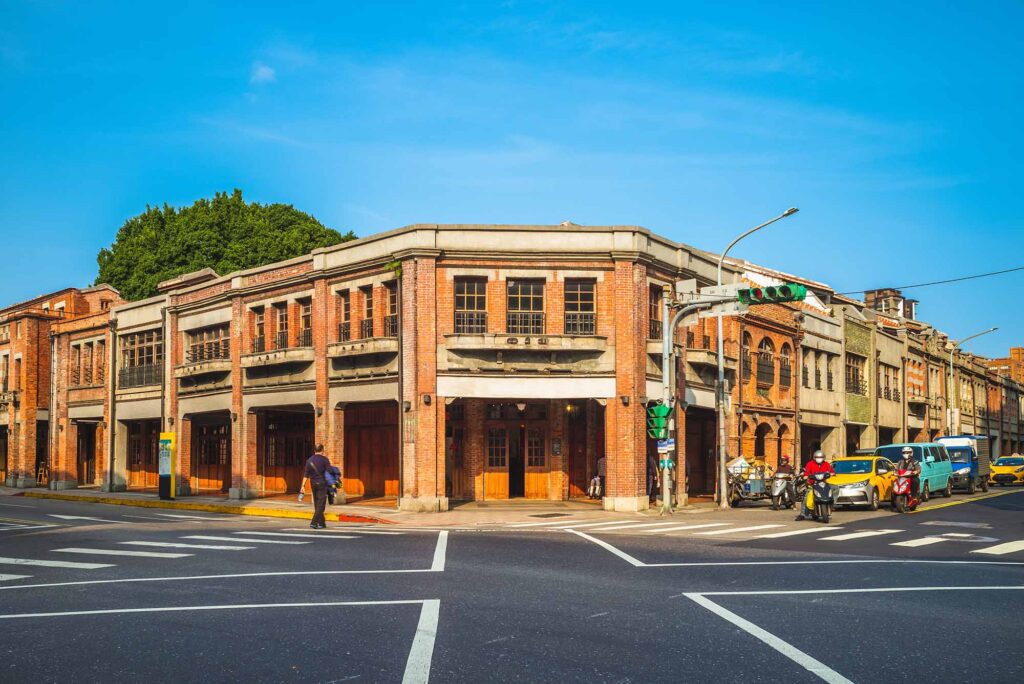
Taipei’s tourism authorities describe Dihua as a historic trading district known for Chinese herbs, groceries, clothing and Taiwanese tea, with preserved red-brick and Baroque-influenced commercial architecture.
Why Dihua Street works so well
It doesn’t feel entirely reconstructed for tourists.
Yes, stylish cafés and design shops have moved in.
But old businesses still sell:
tea, dried foods, mushrooms, fabric, herbs and traditional ingredients.
That mix is what makes Dihua Street interesting.
You aren’t looking at an old commercial street that stopped being commercial.
It simply changed.
Our dedicated Dihua Street Guide explains the architecture, shopping and history in greater detail.
Make it a half-day Old Taipei route
We like combining:
Dihua Street → Xiahai City God Temple → Dadaocheng → riverfront → Ningxia Night Market
That gives the afternoon a natural progression instead of treating Dihua as a single photograph.
You absolutely do not need a private tour just to visit Dihua Street.
If you’re trying to combine it with Longshan Temple, Chiang Kai-shek Memorial Hall, Taipei 101 or several other neighborhoods in one day, it can also fit naturally into a customizable Taipei route.
Lunar New Year changes everything
In the weeks before Lunar New Year, Dihua becomes one of Taipei’s major holiday-shopping areas, with significantly heavier crowds and a completely different atmosphere. Taipei City continues to designate it as a core Lunar New Year shopping district.
Personally, we think it is worth experiencing once.
Just don’t expect the quiet version of Dihua Street that you saw in somebody’s Tuesday-morning photograph.
Our verdict
Best old street experience within Taipei.
If you have only three days in Taiwan and don’t want another day trip, choose this one.
4. Shifen Old Street — Best for Families and an Actual Activity
Shifen is not on this list because it has the most impressive historic architecture.
It doesn’t.
Shifen works because the railway still runs directly through the settlement, and visitors can participate in the town’s famous sky-lantern experience.
The official Tourism Administration classifies the Shifen Scenic Area around both old streets and railway tourism.
Why international travelers remember Shifen
Write wishes on a lantern.
Paint or write on each side.
Walk onto the railway area with the lantern-shop staff.
Release it.
Take photographs.
It is simple.
But for families, couples and multi-generation groups, it becomes one of those Taiwan experiences that everyone can actually participate in.
That matters.
Not everybody in the family wants another museum.
Our full Shifen Old Street guide covers lanterns, the railway, waterfall and how to combine Shifen with Jiufen.
Add Shifen Waterfall
This is what turns Shifen into a stronger half-day stop.
The waterfall gives the day:
activity + railway + nature
instead of simply another shopping street.
Jiufen vs Shifen
Don’t make them compete.
Jiufen is better for food, tea, atmosphere and scenery.
Shifen is better for lanterns, railway and waterfall.
This is why we often combine them in one northern Taiwan day.
Families planning a longer Taiwan trip may also want our broader family planning guide.
Our verdict
Best with children: Shifen.
Best architecture: definitely not Shifen.
Would we still include it on a first trip? Yes.

5. Anping Old Street — Best for Food and Early Taiwan History
Tainan has a strong argument for being Taiwan’s best city for travelers who like history and food.
And Anping brings both together.
Tainan’s tourism authority describes Anping’s Yanping Street as the first street built by the Dutch in Anping more than 300 years ago; it is commonly promoted as “Taiwan’s First Street.”
But don’t arrive expecting a silent historical monument.
Anping is lively.
Sometimes very lively.
Come hungry
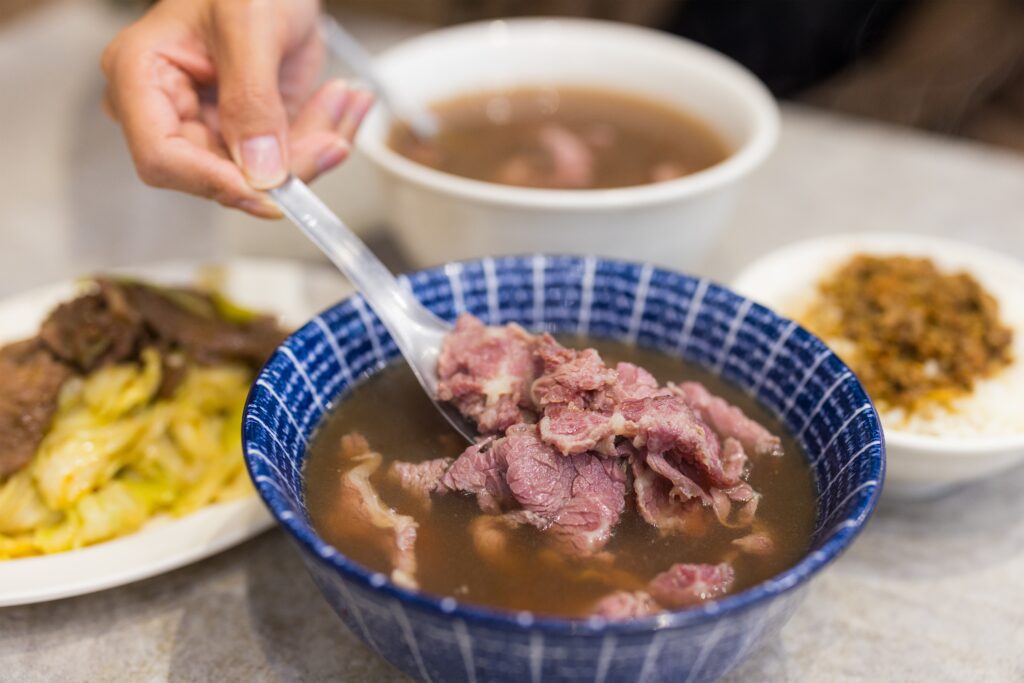
This is one of the best streets on the list for snacking.
Look for:
shrimp rolls, shrimp crackers, oyster dishes, tofu pudding, fish-ball soup and traditional preserved foods.
But again, don’t stop at the food.
Walk into the lanes behind the commercial street.
You may encounter old houses, temples, Sword Lion decorations and narrow historic alleys that show a quieter side of Anping.
What should you combine with Anping?
Definitely include more of Tainan.
Anping Fort.
Anping Tree House.
Historic merchant houses.
Confucius Temple.
Shennong Street.
Tainan deserves a full day—or more.
Our private historical route combines Anping with Tainan’s larger cultural story.
Our verdict
Best for food + history: Anping.
But we would not travel from Taipei solely to visit Anping Old Street.
Go because you are visiting Tainan.
6. Daxi Old Street — Best for Historic Façades
At Daxi, one piece of advice improves the visit immediately:
Look up.
The architecture is the attraction.
Daxi developed as an inland river-trading center, and Heping Road remained an important commercial district from the Qing period. The Tourism Administration notes that traditional trades such as dried-tofu production, woodworking and stonework can still be seen around the old street.
The decorative façades along the commercial streets give Daxi a completely different visual identity from Jiufen.
What should you eat?
The obvious answer is:
Daxi dried tofu — 豆干
You’ll see it everywhere.
There are also traditional sweets and old-school snack shops throughout the district.
Who should choose Daxi?
Daxi is particularly suitable for travelers who enjoy:
architecture, local food, Taoyuan countryside and slower town exploration.
It can also pair with the Daxi Wood Art Ecomuseum and other heritage sites in the area.
Our verdict
If your idea of an old street is beautiful historic façades, Daxi belongs near the top of your list.
If you mainly want dramatic natural scenery, choose Jiufen instead.
7. Sanxia Old Street — Best Architecture + Temple Combination Near Taipei
Sanxia deserves more international attention.
It is relatively close to Taipei, compact enough for a comfortable visit, and combines historic streetscape with one of Taiwan’s most interesting temples.
The Tourism Administration describes the historic commercial district around Minquan Street as preserving red-brick buildings, arcades and Baroque-influenced architecture dating largely from the Japanese colonial period.
But the reason we particularly like Sanxia is:
Qingshui Zushi Temple.
Even travelers who feel they have already seen enough temples may appreciate the craftsmanship here.
What should you eat?
The signature snack is:
Sanxia horn bread — 金牛角
Try it warm if you can.
Make Sanxia a better day trip
Instead of traveling to Sanxia, walking down the street and immediately returning to Taipei, combine it with Yingge.
Yingge is Taiwan’s pottery town.
That gives you:
Sanxia architecture → temple → old street food → Yingge pottery
Now the day feels varied.
Our verdict
Best alternative to Jiufen for a repeat Taipei visitor.
It is less visually dramatic, but much stronger for architecture and temple craftsmanship.
8. Tamsui Old Street — Best Sunset and Easiest Half-Day
Tamsui might be the easiest old-street outing in northern Taiwan.
Get on Taipei MRT’s Red Line.
Stay on it.
Eventually you reach Tamsui.
No mountain bus.
No railway connection.
No complicated transfer.
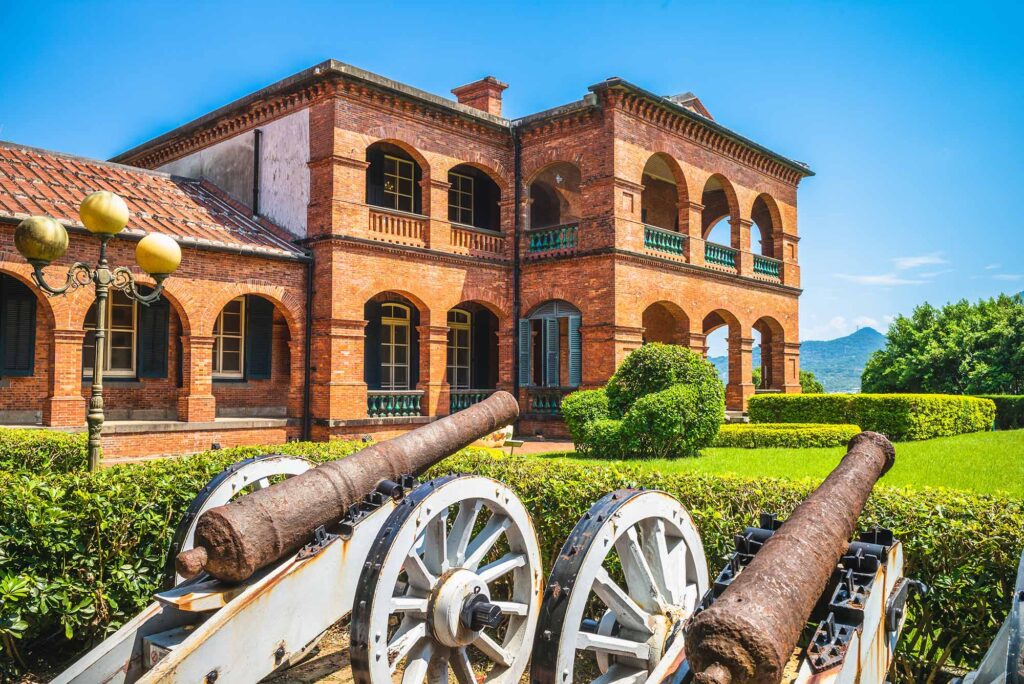
The Tourism Administration highlights Tamsui’s mix of historic buildings, local foods such as A-gei, fish dumplings and iron eggs, riverfront scenery and sunset views.
Tamsui is more than the old street
If you visit only the busiest food section and turn around, you’ve missed the point.
Walk along the river.
Then, depending on your time, continue toward:
Fort San Domingo, Little White House, historic school areas or Fisherman’s Wharf.
Our Tamsui destination guide covers the larger area.
When should you go?
We prefer afternoon into sunset.
Walk.
Eat.
Explore the history.
Then watch the light change over the Tamsui River.
That’s a much better use of Tamsui than arriving early in the morning just to check “Old Street” off your list.
Our verdict
Best easy half-day from Taipei.
Also one of the better options for travelers who prefer flatter walking compared with Jiufen.
9. Beipu Old Street — Best for Hakka Culture
Beipu (北埔) is one place where the food and architecture tell a cultural story that is quite different from Taiwan’s Minnan-majority historic towns.
It is a traditional Hakka settlement in Hsinchu County.
Taiwan’s Tourism Administration notes that the compact old district contains a particularly high concentration of historical sites, while local specialties include lei cha—ground tea—and persimmon products.
Why choose Beipu?
Because it gives you something the other streets don’t:
a clear introduction to Hakka culture.
Instead of another coastal trading town, you experience Hakka architecture, food traditions and tea.
What should you try?
Start with:
擂茶 — lei cha
Often translated as ground tea.
Depending on preparation, tea leaves, nuts, seeds and other ingredients are ground before being mixed into a drink.
Also look for persimmon-based products and Hakka dishes.
The Hakka Affairs Council identifies Beipu as a particularly representative traditional Hakka settlement, with surviving Qing and Japanese-era buildings.
Good for seniors?
Interestingly, the Tourism Administration specifically categorizes Beipu under accessible and senior travel, and provides public-transport accessibility information.
That makes it an interesting alternative when steep Jiufen staircases are not suitable.
Our verdict
Best old street for Hakka culture.
And one we would recommend much more often to repeat visitors than another famous northern tourist street.
10. Qishan Old Street — Best Southern Hidden-Gem Choice
If you’re already traveling in southern Taiwan, don’t assume the old-street story ends in Tainan.
Qishan (旗山), in Kaohsiung, has a completely different identity.
Its development was connected strongly with agriculture, especially bananas and sugarcane, and the historic district retains red-brick buildings, sandstone arcades and a mix of architectural styles.
What makes Qishan different?
Bananas.
Lots of them.
Qishan was historically an important banana-producing area, and banana-flavored desserts and souvenirs remain part of the town’s tourism identity.
The architectural landscape is also interesting because Chinese-style buildings appear beside western-influenced façades and the old railway station.
What should you combine with Qishan?
This is where itinerary planning matters.
Don’t drive all the way from Taipei for Qishan Old Street.
If you’re already in southern Taiwan, combine it with:
Meinong
for Hakka culture,
or other inland Kaohsiung attractions.
That gives you a much more interesting day than treating Qishan as a standalone snack street.
Our verdict
Best southern old street for travelers who want something less internationally famous.
Jiufen vs Lukang: Which One Should You Choose?
If you have only one:
Choose Jiufen if you want
Mountain scenery, tea houses, food, easy access from Taipei and the classic first-trip Taiwan experience.
Choose Lukang if you want
Deeper history, temples, traditional architecture and historic alleys.
For a short first Taiwan trip, we would normally choose Jiufen.
For a longer trip around Taiwan, we would absolutely add Lukang too.
Jiufen vs Shifen: Do You Need Both?
Usually yes, because they are completely different.
Jiufen: food, tea, mountain old town and ocean views.
Shifen: sky lantern, railway and waterfall.
That is why a northern Taiwan day often combines both rather than asking you to choose.
See our Jiufen & Pingxi private day route.
Which Old Streets Are Best Without a Private Tour?
You do not need a private tour for every place on this list.
Dihua Street is easy with Taipei MRT.
Tamsui is extremely easy on the Red Line.
Jiufen is manageable by public transportation if Jiufen itself is your main destination.
Shifen works well by railway if you have enough time and enjoy planning.
Private transportation becomes more useful when you try to combine several geographically separated places—particularly Jiufen + Shifen + Yehliu, or when traveling with children, seniors or a tight schedule.
That distinction matters.
The goal isn’t to replace Taiwan’s excellent public transportation with a car.
The goal is to use the right transportation for the itinerary.
Best Old Streets in Taiwan by Travel Style
If you’re choosing based on the type of traveler rather than location, this is our shortlist:
| Travel Style | Our Pick |
|---|---|
| First Taiwan trip | Jiufen |
| History lover | Lukang |
| Food lover | Anping / Lukang |
| Families | Shifen |
| Seniors | Dihua / Tamsui / Beipu |
| Architecture | Daxi / Sanxia |
| Hakka culture | Beipu |
| Photography | Jiufen |
| Easy Taipei trip | Tamsui |
| Repeat visitor | Beipu / Qishan / Sanxia |
| Taipei only | Dihua Street |
This is ultimately more useful than simply asking which street receives the most visitors.

How Many Taiwan Old Streets Should You Actually Visit?
For most travelers:
three to five is plenty.
There is no prize for collecting all ten.
In fact, after enough old streets, they begin blending together.
What works much better is choosing them according to your route.
A 5-Day Taiwan Trip
We would normally use:
Dihua Street → Jiufen → Shifen
and then move on to completely different experiences such as mountains or lakes.
See our Taiwan 5 Day Itinerary.
A Longer Taiwan Trip
As you continue south, add:
Lukang in central Taiwan.
Then:
Anping in Tainan.
If you have around ten days, this creates a natural cultural progression rather than repeating the same attraction over and over.
See our 10 Days in Taiwan Itinerary.

🚗 The Taiwan Old Street Route We Would Actually Recommend
If old streets, food and historical neighborhoods are one of your priorities, we would arrange them approximately like this:
Taipei: Dihua Street.
Northern Taiwan: Shifen + Jiufen.
Central Taiwan: Lukang.
Southern Taiwan: Anping.
Four regions.
Five old streets.
And importantly, five different stories.
Dihua shows Taipei’s trading history.
Shifen introduces railway culture.
Jiufen gives you Taiwan’s mining-town story.
Lukang shows the heritage of a major historic port.
Anping reaches back into Tainan’s early colonial and maritime history.
That’s much more meaningful than visiting ten places merely because all ten contain the words “Old Street.”
A multi-day itinerary such as our Taipei–Jiufen–Sun Moon Lake–Taichung route also shows how old streets can fit alongside very different scenery rather than dominate an entire trip.

Best Time to Visit Taiwan Old Streets
Taiwan old streets can generally be visited throughout the year, but weather and day of week matter more than many visitors expect.
Spring and autumn are comfortable for walking.
Summer can be hot and humid, particularly in southern Taiwan.
Jiufen can be rainy and misty even when Taipei’s weather seems fine.
Winter can be pleasant in Tainan and Kaohsiung while northern Taiwan feels cooler and damp.
For month-by-month planning, use our full weather guide.
Weekday or weekend?
Where possible, choose weekdays for Jiufen, Shifen, Daxi, Sanxia and Beipu.
Local visitors often take domestic day trips on weekends, and a narrow old street changes considerably when several tour groups arrive at the same time.
Are Taiwan’s Famous Old Streets Too Touristy?
Some are.
Especially Jiufen.
But “touristy” does not automatically mean “bad.”
Jiufen attracts people because the setting really is unusual.
Shifen attracts visitors because launching a lantern beside a mountain railway really is memorable.
Tamsui is crowded partly because Taiwanese residents enjoy spending afternoons there too.
Instead of asking:
“Is it touristy?”
we would ask:
“Is there enough beyond the tourism to make it worth my time?”
For the ten streets in this guide, our answer is yes.
But you may need to move beyond the first fifty meters.
Explore a side lane.
Visit the temple.
Read about the town’s history.
Sit for tea.
Try the food the region is actually known for.
Stay longer than the tour bus.
That’s usually when the old street becomes interesting.
Best Old Streets in Taiwan FAQ
What is the most famous old street in Taiwan?
Jiufen Old Street is probably the most recognizable old street among international visitors because of its mountain location, food stalls, tea houses, red lanterns and sea views.
What is the best old street in Taiwan?
For a first-time visitor, we recommend Jiufen.
For history, choose Lukang.
For food and early Taiwan history, choose Anping.
For an easy Taipei experience, choose Dihua Street.
What is Taiwan’s oldest old street?
Anping’s Yanping Street is promoted by Tainan tourism authorities as Taiwan’s First Street, with origins dating to the Dutch settlement period more than 300 years ago.
Is Jiufen Old Street worth visiting?
Yes. It is popular and can become crowded, but the combination of mountain scenery, food, tea culture, mining history and old lanes still makes Jiufen one of Taiwan’s strongest first-trip destinations.
Are Jiufen and Shifen the same place?
No. Jiufen is a mountain old town known for tea, food and views. Shifen is a railway village famous for sky lanterns and Shifen Waterfall. They are often combined in the same day.
Which Taiwan old street has the best food?
We would choose Anping or Lukang. They both offer food traditions that are strongly connected to their region rather than simply generic tourist snacks.
Which old street is easiest from Taipei?
Dihua Street is already in Taipei. For somewhere outside central Taipei, Tamsui is easiest because Taipei MRT’s Red Line goes directly there.
Which Taiwan old street is best for seniors?
Dihua Street, Tamsui and Beipu are generally easier choices than Jiufen. Jiufen has substantial stairs and sloped walking.
Which old street is best for children?
We would choose Shifen because the sky-lantern activity and railway make the visit more interactive.
💁🏻♀️ So, Which Taiwan Old Streets Should You Put on Your Trip?
Don’t choose old streets because a ranking tells you which one was visited by the most people last year.
Choose them because they add something different to your route.
For most first-time international travelers, we would start with:
Dihua Street for old Taipei.
Jiufen for the iconic mountain town.
Shifen for the railway and sky-lantern experience.
Then, if you continue around Taiwan:
Lukang for central Taiwan’s historic port culture.
And:
Anping for Tainan’s food and early history.
Five old streets.
Five different reasons to visit.
That’s enough for most trips.
If you are returning to Taiwan, then places such as Sanxia, Beipu, Daxi and Qishan become much more interesting because you no longer need every stop to be one of Taiwan’s internationally famous landmarks.
This is how we plan private Taiwan itineraries too.
We don’t add an old street simply because every itinerary template contains one.
We look at where you’re already going.
What you enjoy.
How much you like walking.
Whether you’re traveling with children or grandparents.
Whether food, photography, architecture or history matters more.
Then we choose the old street that actually fits.
If you’re still at the beginning of your Taiwan planning, our main Taiwan guide can help you decide which regions to combine.
Because the goal isn’t to visit every old street in Taiwan.
It’s to find the ones that make you understand Taiwan a little better.